3D-printed gifts
Custom application jig
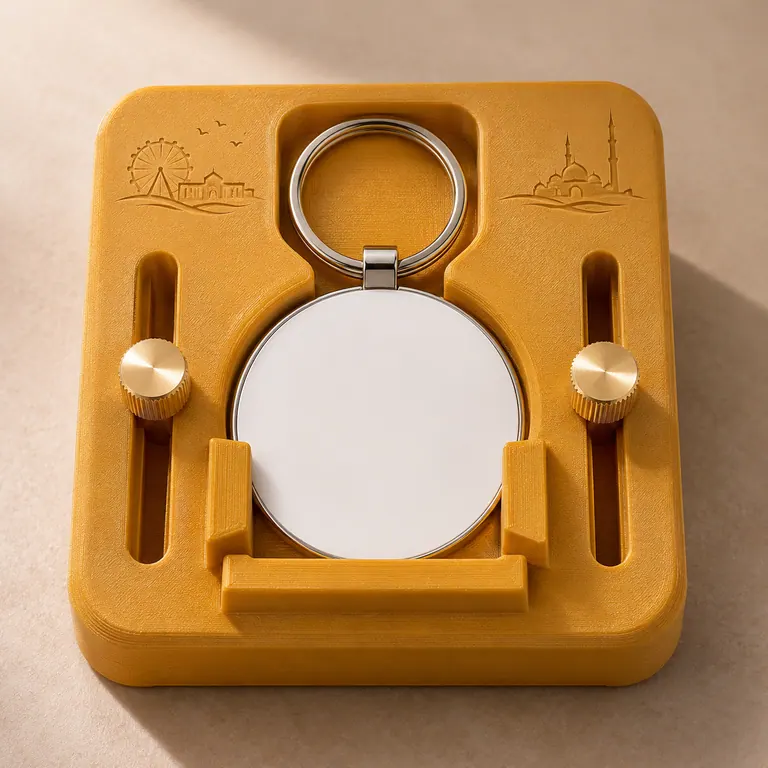
An alignment fixture locates a part during personalisation. Share the part dimensions, placement target and repeat operation to assess.
Read product details & FAQsEach order is custom quoted. Send your quantity, specifications and required date for pricing and production time.
Request this quote on WhatsAppWhat to include in your brief
- Shape & fit
- Overall dimensions, colours and any mating parts
- Artwork & personalisation
- Attach a dimensioned sketch or reference in PDF, PNG or JPG. Mention if you have a separate 3D model.
How to request this product
Enter your quantity and preferred date in the quote form. Upload a PDF, PNG or JPEG up to 3 MB. The studio will review the artwork, price and timing with you.
Product details
Custom application jig
An application jig acts as a reusable guide when the same mark needs to land in the same place on several objects. A corner, rim or other repeatable feature provides a reference for loading each piece. Your working motion determines where the guide needs to leave access.
Before you order
Photograph the object in its working position and mark the reference edge, the target artwork position and how the finished piece is removed.
Product FAQs
Can one jig align several sizes of the same product?
Send a measured drawing of each size and identify the feature shared by all of them. The studio can assess whether one guide, interchangeable pieces or separate guides suit the job.
What can I send if I have no 3D model?
A sketch with front and side views, overall dimensions and a photo of the intended use is a useful start. For a fitted piece, show the part it must meet and identify the surfaces that need clearance.
How do I describe the finish I want on a 3D print?
Identify the face people will see and whether the piece will be held or displayed. Add a reference for colour and texture. A sample can show how layer lines look on that particular shape.
What should I check on a fitting sample?
Use the real object or location. Check insertion, removal, orientation and clearance, and mark any tight point on a photograph of the sample before requesting further pieces.